20th Century Navigator
The 20th century feels like "yesterday" — until you try to tell the whole story. There are too many forks, too many layers, too many people who influenced each other even when they seemed to live in different worlds. This project is an attempt to turn the century into a living instrument: so you can study events, come back, compare, see connections and stay oriented in the volume of information.
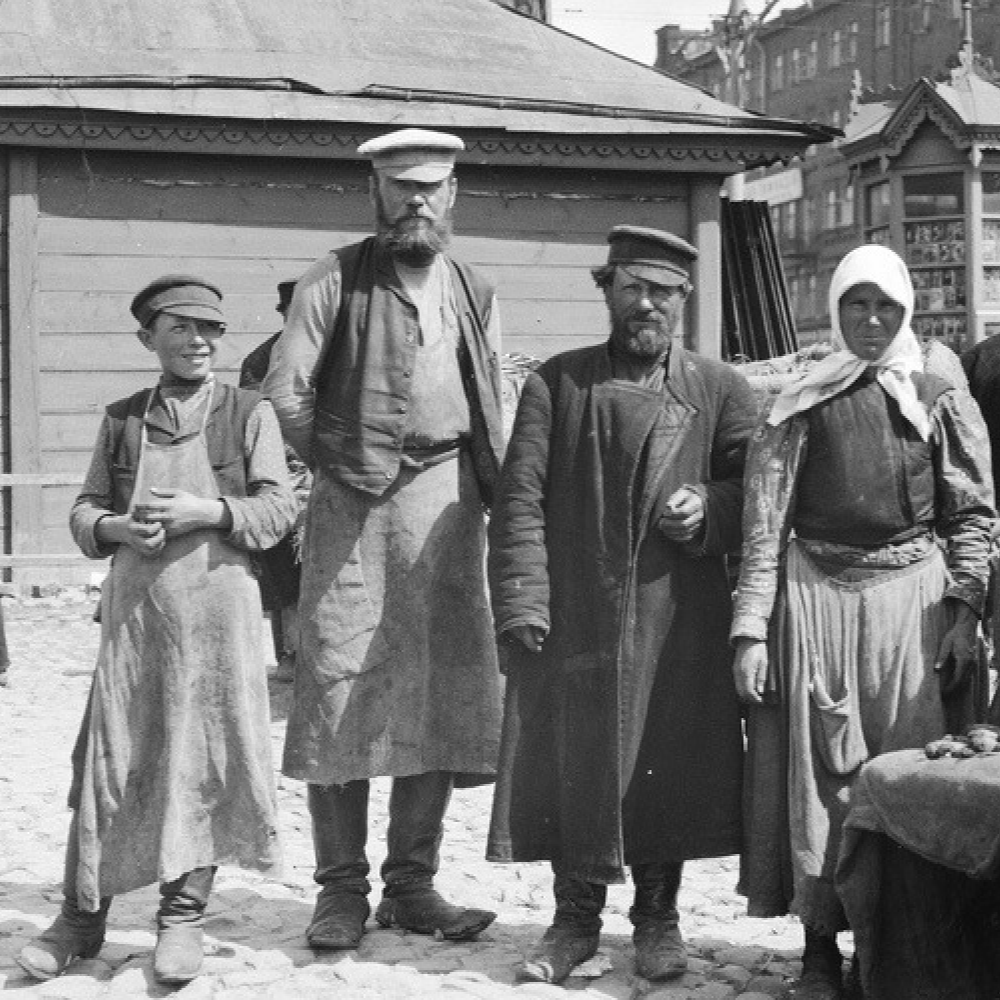

"The 20th century is a laboratory of modernity: the speed of change, the cost of mistakes, and the strange human ability to repeat the same plots — dressed in new clothes." — working formulation of the project's tone
The idea
We are building an educational navigator through the events, people and phenomena of the 20th century. A tool that helps you assemble your own understanding: where exactly something began, why it unfolded this way, who was connected to whom, and why one event suddenly flares up in another place years later. Textbooks are arranged linearly: first the First World War, then the Great Depression, then the Second World War, and so on to the end of the century. Real history unfolds in parallel. At any moment, several large processes run at once: scientific, political, cultural, demographic. They can exist side by side, and at the same time these processes strongly influence each other. This simultaneity is exactly what we want to show — it is the most interesting thing about the 20th century.


How it feels
At the centre sits a timeline you can "zoom in" and "zoom out" for different levels of detail. You can arrive with a single question and leave with an understanding of the context. Alongside it — people and connections, because history consists of people who influenced each other, argued, inspired, broke and built. Imagine: you are reading about the invention of the transistor in 1947. The navigator shows you that in the same year the British Empire fractured, the Cold War was beginning on the other hemisphere, and in the scientific community debates over quantum mechanics and genetics ran in parallel. This gives you context: the reality in which these engineers worked, and why this exact moment became the point from which the electronic era began.


Supply lines and logistics of the era
Maps and borders as the interface of politics
The principle of source clarity
One of the main traps of historical content is mythologisation. A complex person becomes a symbol. The chain of accidents behind an event disappears. A century of millions of deaths is reshaped into a neat narrative about heroes and villains. We try to avoid this. That means: transparent sources for every claim, careful wording in zones where historians disagree, honest presentation of alternative interpretations. If there are three versions of the causes of an event and all three carry scholarly weight — we show all three and let the reader draw their own conclusion.

The most common mistake is to look at events one by one. The navigator exists precisely so you can see the system.
Who it is for
For a school teacher who wants to show a class the living connection of events. For a humanities student writing a term paper and looking for context faster than on Wikipedia. For a journalist who needs to check an analogy with the past before using it. For a person who simply wants to understand how we arrived where we are now.
Partnership
This is a joint project with partners who care about the idea of "clear history". We are open to collaboration with educational teams, museums and research centres — especially if you have sources, maps, archival materials and the desire to make them alive. If you have a digitised archive that no one looks at — perhaps its place is here.
Telegram
https://t.me/naasson
Project status
The project is in development. We are assembling the "skeleton of navigation" and will then grow the content so that it remains a useful signal: only verified sources, transparent connections and careful wording. There is no public launch yet. There is a working interface prototype and the first pilot selection of events from the first third of the century. Turn-key infrastructure in Yandex Cloud in one click. GitOps, Kubernetes, domains, TLS, and a catalog of 270+ self-hosted apps — no DevOps hire required.
Naasson Apps — a home for your apps